
Case Study
Flood Night: A City's AI Voice Agent Becomes Its Emergency Front Door
When South Florida flooded, a city's AI voice agent became the front door to its Emergency Operations Center: 298 resident calls in about 35 hours, 227 connected to the EOC in a median of 26 seconds.
Your brand doesn't just use voice agents—it casts them.
Open the Workshop — Get a CallSummary
Over about 35 hours on November 2 and 3, the city's AI voice agent answered 298 residents and connected 227 of them to the Emergency Operations Center, with a median of 26 seconds from greeting to handoff. Ten of those connections came between midnight and 7 AM.
The situation
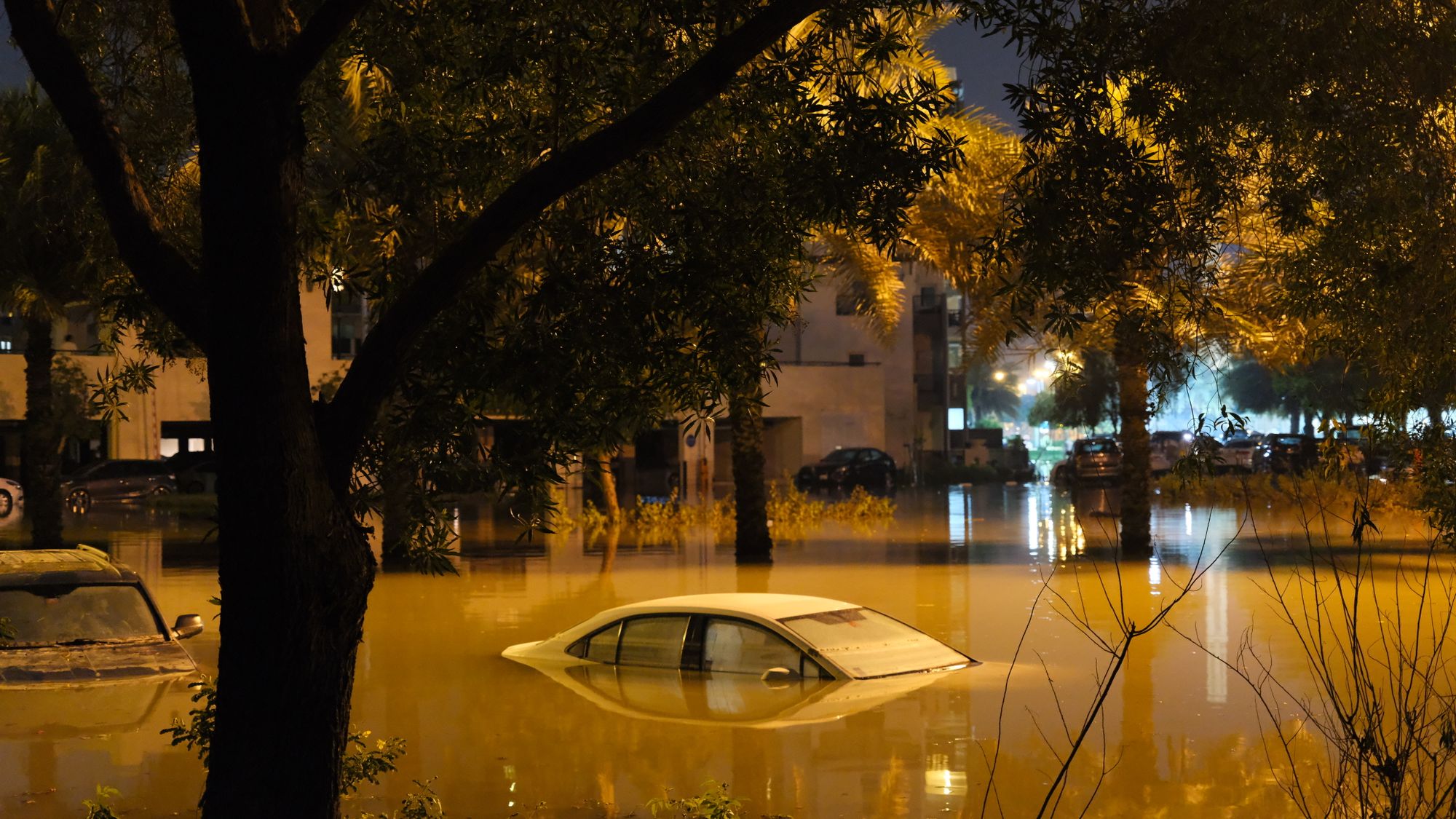
On Sunday night, November 1, heavy rain flooded neighborhoods across South Florida. By Monday morning, residents in one coastal city were watching water come through their front doors, cars were stalled in flooded streets, and some households could not get out. The city declared a local state of emergency and opened its Emergency Operations Center (EOC).
The city, a client of one of our partners, already had an AI voice agent built and operated by Workforce Wave answering its main public line. That line handles everyday questions about trash pickup, permits and utilities, and connects callers to the right department. On Monday the city asked our partner and our team to point flood calls at the EOC phone bank, as fast as possible.
Local news coverage that day listed the agent's phone number as the city's Emergency Operations Center line. For residents looking for help, the digital agent was the first voice they heard.
What changed, the same afternoon
- A flood route to the EOC. Any caller describing flooding, standing or rising water, storm damage, sandbags, shelters or evacuation is connected to the EOC line. Everything else keeps flowing to the usual departments.
- One question in the greeting. At the city's request, the agent now opens by asking, "Are you calling for the Emergency Operations Center?" A caller can answer over the greeting, and a yes goes straight to the EOC.
- No intake on emergency calls. The agent stopped asking EOC callers for their name and number. The resident's phone number is recorded automatically on every call, so speed came at no cost to follow-up.
Nothing changed in the city's own phone system. The rule for life-threatening emergencies stayed in place: those callers are told to hang up and dial 911, and the agent never transfers them.
How the two days unfolded
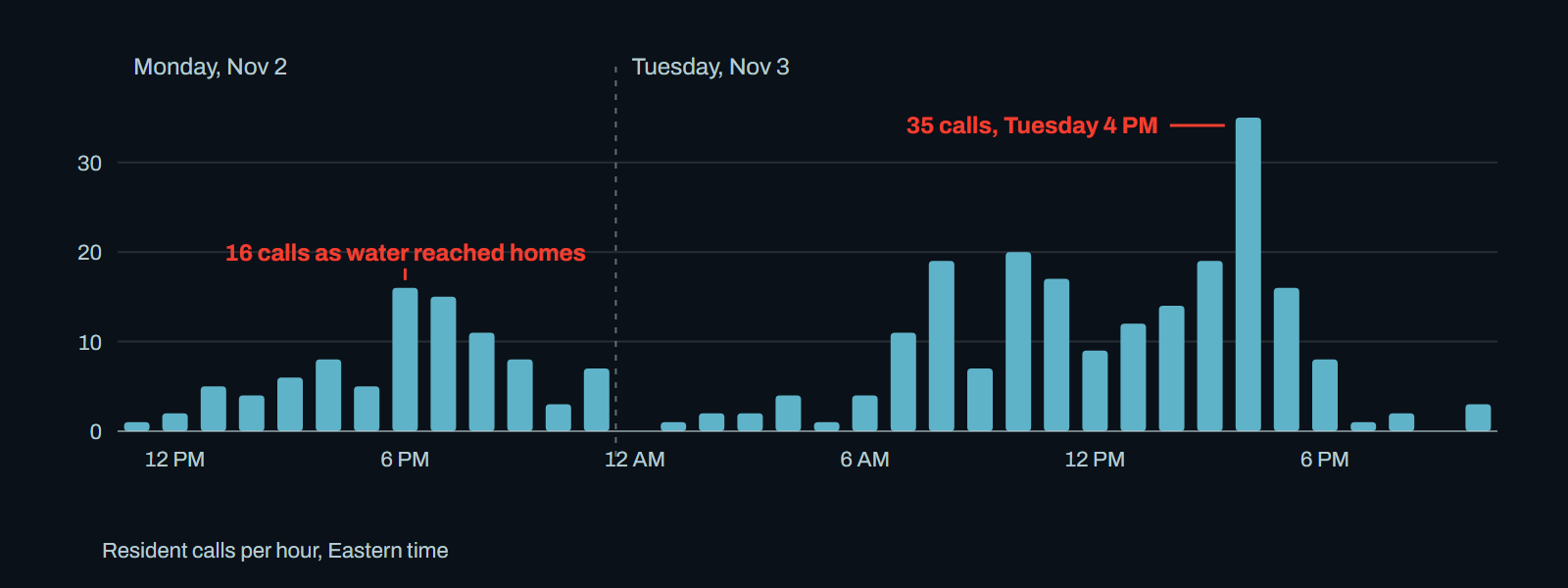
Calls climbed through Monday afternoon and peaked between 6 and 9 PM, as water reached homes after dark. They kept coming overnight, then built through Tuesday as residents asked about pumping, flooded streets and getting out, reaching 35 calls between 4 and 5 PM. More than half of EOC callers simply answered yes to the greeting question and were connected in about 22 seconds. Callers who described their situation instead, such as a flooded street, being stuck at home, or water coming into the house, were usually connected within a minute.
| Where calls went | Calls |
|---|---|
| Connected to the Emergency Operations Center line | 227 |
| Connected to a city representative | 13 |
| Connected to water and sewer | 5 |
| Connected to city administration | 1 |
| Answered or redirected by the agent, no transfer needed | 21 |
| Hung up during the greeting, under 20 seconds | 31 |
| Resident calls, Nov 2 noon to Nov 3 10:42 PM | 298 |
What residents were calling about
A sample of the calls, described without names or addresses.
- Monday, 7:10 PM. A family flooded in and unable to leave. The agent confirmed nobody's life was in danger and connected them to the EOC in under a minute.
- Monday, 7:12 PM. A caller who started by asking for customer service, then said they wanted to evacuate. The agent connected them to the EOC right away.
- Monday, 11:37 PM. A caller who began in Spanish, then chose English. Asked about flooding and was connected to the EOC.
- Monday, 11:56 PM. A resident needing a fire rescue ride out of a flooded neighborhood. The agent pointed them to 911 if anyone was in danger, then connected them to the EOC.
- Tuesday, 4:53 AM. A home taking on sewage water in the middle of the night. Connected to the EOC.
- Tuesday, 3:28 PM. A frightened resident describing a row of stalled cars in floodwater and no way to get out for food. The agent answered, "I'm here with you," and connected them to the EOC in the same breath.
Everyday service kept running alongside the emergency. Residents with sewer and water main problems were sent to water and sewer, and 13 callers who asked for a person were connected to a city representative.
What this showed
Two things made the difference. The city already had an agent on its public line, so there was no new number to publish. And the changes were small and fast, with one new route, one greeting question, and less intake on emergency calls.
The calls also showed where the agent can do more. A few residents asked for live information, such as current flood conditions, road closures, and whether a daycare should close the next day. The agent gave general safety guidance and connected them to the EOC. With the city's own updates on hand, it could have answered them directly.
Working through the crisis alongside our partner and the city gave all three of us real insight into how future emergencies can be prepared for ahead of time, in a new way.
A line that stays up when the city goes down
Our platform has connected 99.69% of 36,080 calls to city and public agency lines this year, with 99.97% uptime, as reported in our 90,157-call reliability study. On 178 of 286 days, not a single call failed. One Florida city's resident line connected 99.88% of 13,935 calls.
The agent also lives outside the disaster. It answers from cloud data centers far from the affected area, so it does not rely on city hall's power, phone system or staff being at their desks. Floods, fires, earthquakes and hurricanes can knock out local power and office phones, and the agent keeps answering and keeps routing callers to the city's emergency lines. Residents' own cell or landline service can still be affected by the storm. Even so, a line that lives outside the local grid gives the city an added layer of backup when it needs one most.
Next, a customized emergency pathway
We are excited to keep working with our partner and this city, and with other cities in the near future, to develop customized emergency pathways. With one in place, everything that happened for this city over two long days, from the new greeting to the EOC routing to the city's own emergency updates, could be managed with the flip of a switch. We will share a follow-up article once a structured emergency plan has been developed.
About this case study
Prepared by Colin P. Highland and the Workforce Wave research team, November 2026. Call data covers November 2 at 11:59 AM through November 3 at 10:42 PM, Eastern time. "Connected" means the call was handed to the EOC line by the phone network. Platform reliability figures cover January 1 to October 13, 2026. The city, our partner and residents are not named.
Related Case Studies
Made for One Door
We built a voice agent for a business that has never heard of her. Then we put her on the podcast and asked what happens if they say no.
No Missed Calls: Reliability on a National Restoration Brand's AI Voice Lines
A national restoration brand's English and Spanish AI lines connected 99.90% of 24,054 calls in 2026, with every failure a one-off. Plus the backup route that sends callers to a person if the AI ever fails.
Always Answering: A Year on a Municipal AI Voice Line
A Florida municipality's AI resident line connected 99.88% of 13,935 calls in 2026. How it compares with other ways a city answers its phone, and the backup routing that comes next.